Claycasein applications: a trowel floor without cement, and more
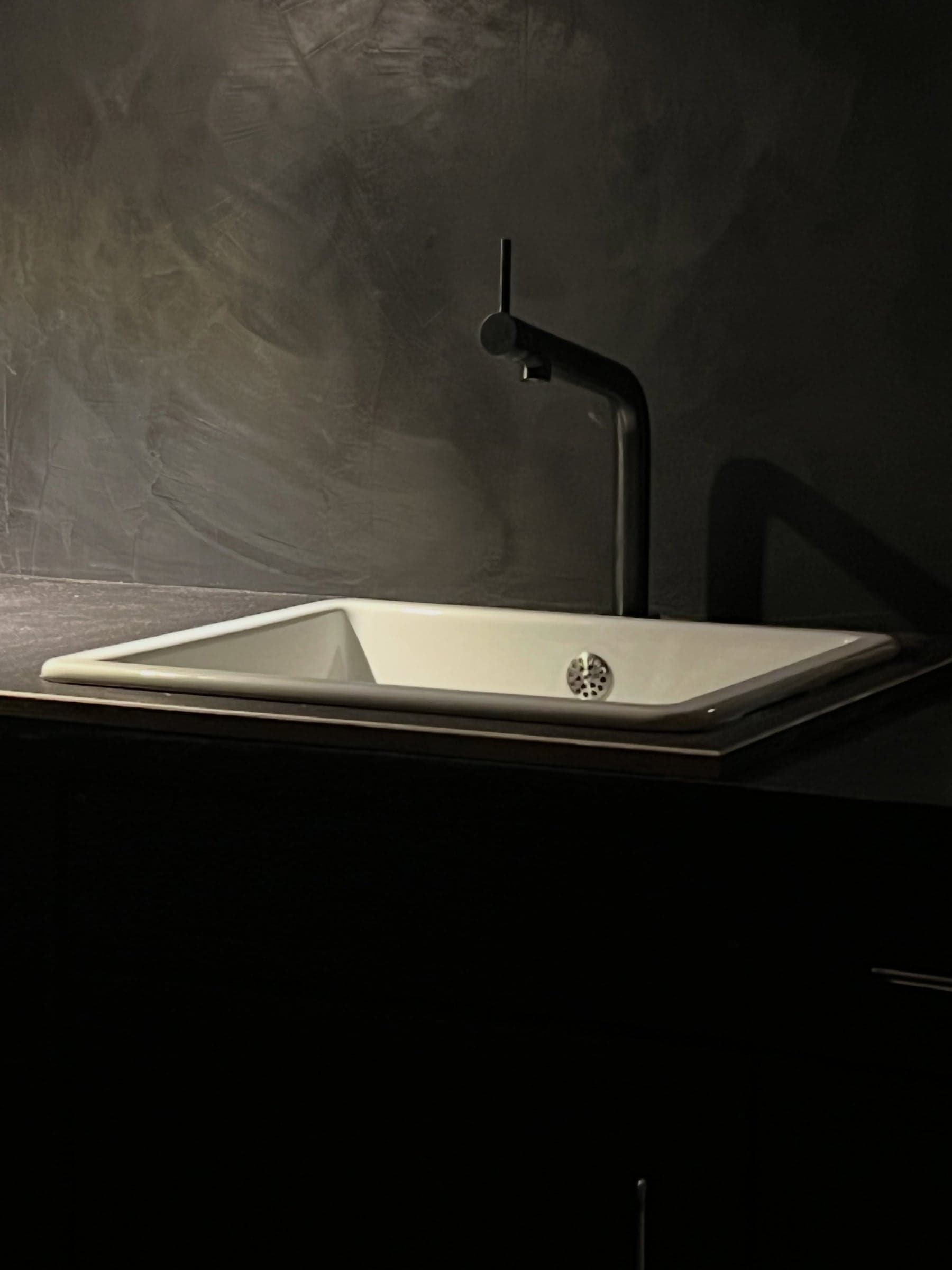
Claycasein applications start with a trowel floor without cement and do not end there. Claycasein adheres to many substrates and so ends up on walls, as a kitchen splashback, on furniture and stairs. All photos come from our customers projects, most of them done by the owners themselves. Every surface carries the handwriting of the person who trowelled it.
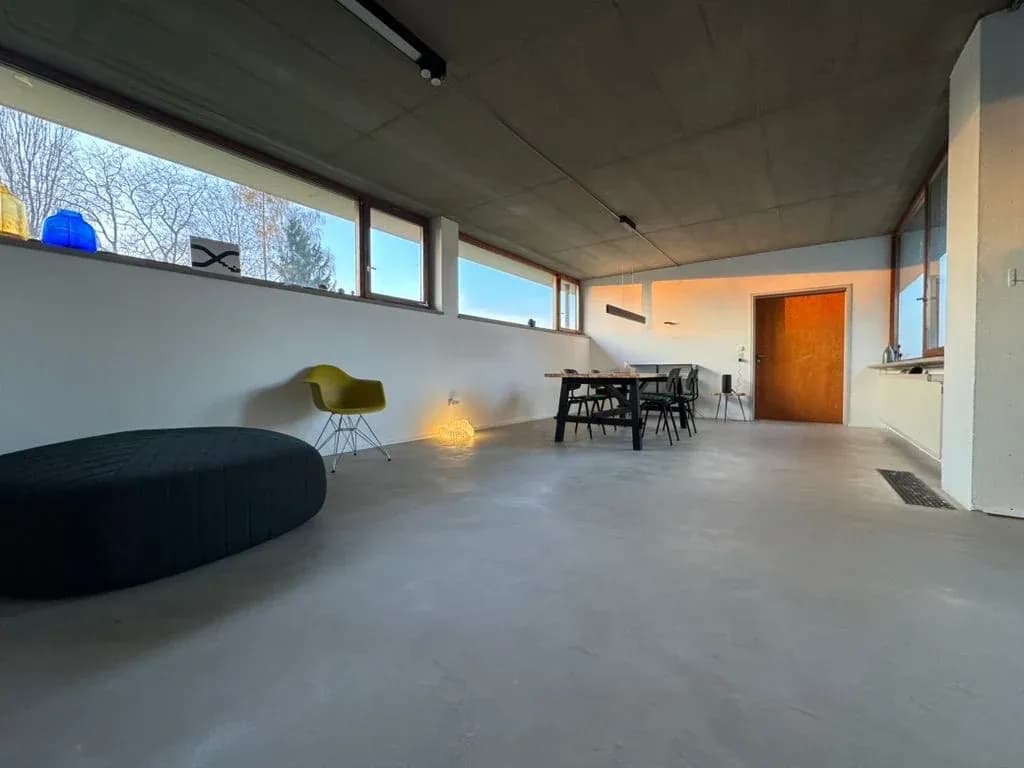
Claycasein applications at a glance
Claycasein is a clay casein trowel compound for seamless surfaces, without cement and without plastics. It is trowelled onto floors, walls, ceilings, kitchen splashbacks, furniture, door leaves, worktops and stairs, in 2 to 3 layers of about 1 mm each.
- Substrates: screed, concrete, wood, Fermacell, plasterboard, gypsum fibreboard, plaster, rammed earth and clay screed. Tiles need levelling first
- Underfloor heating: possible, at low temperature
- Material needed: approx. 1,000 to 1,350 g per m² for 2 to 3 layers
- Finish: oiled and waxed, wipeable, comparable to an oiled wooden floor
- Not suitable: the direct wet area. Claycasein must not stay permanently damp
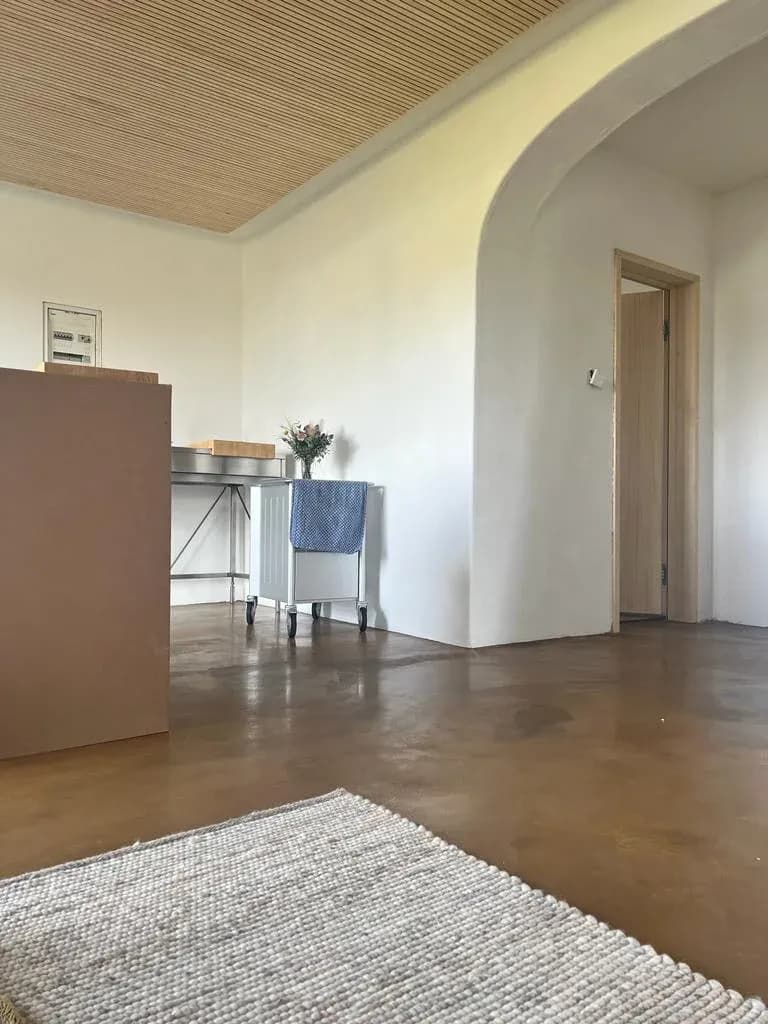
Where the trowel floor without cement has already been laid
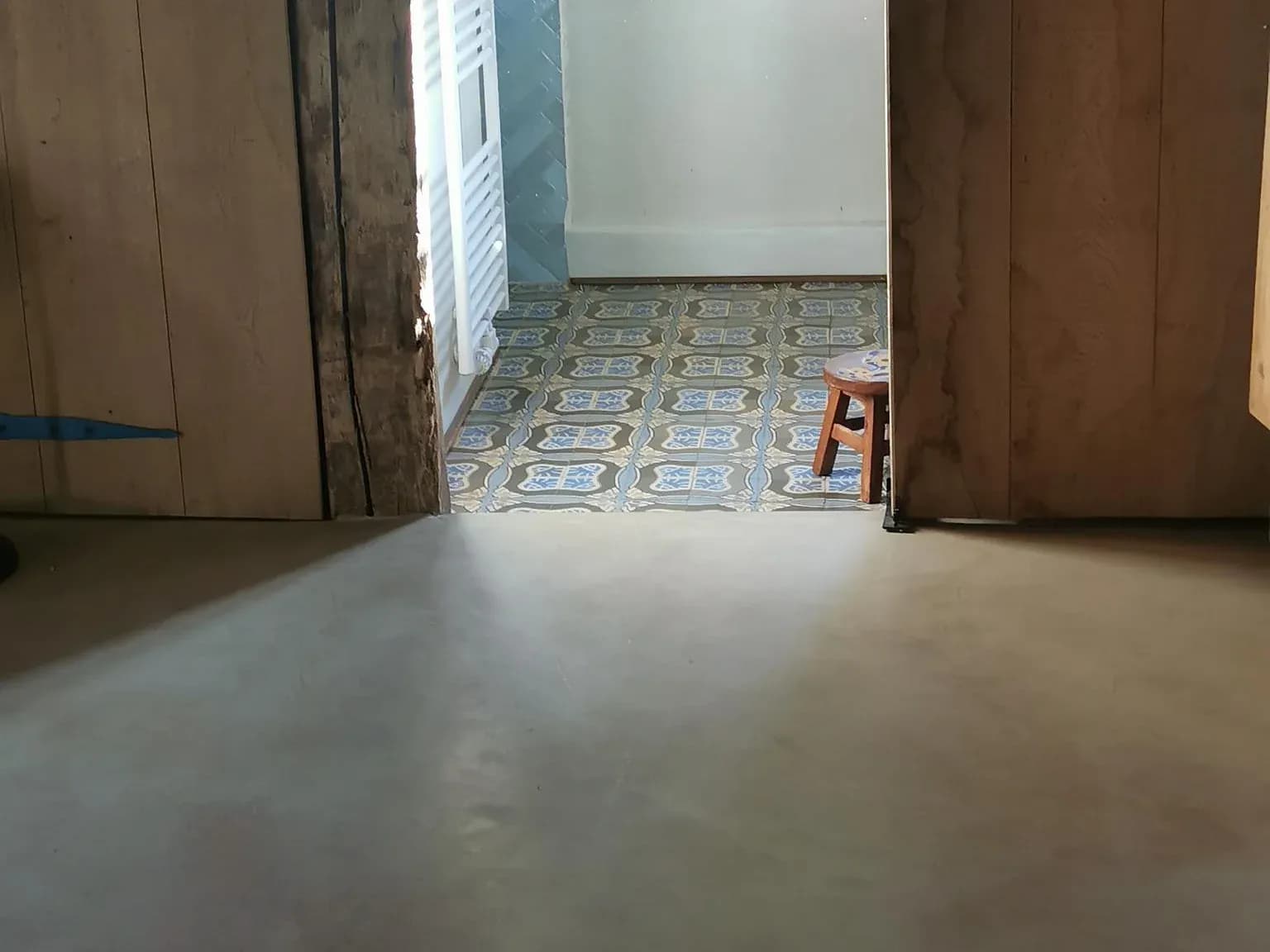
From our customers projects. Most of them trowelled by the owners themselves, some with us on WhatsApp.
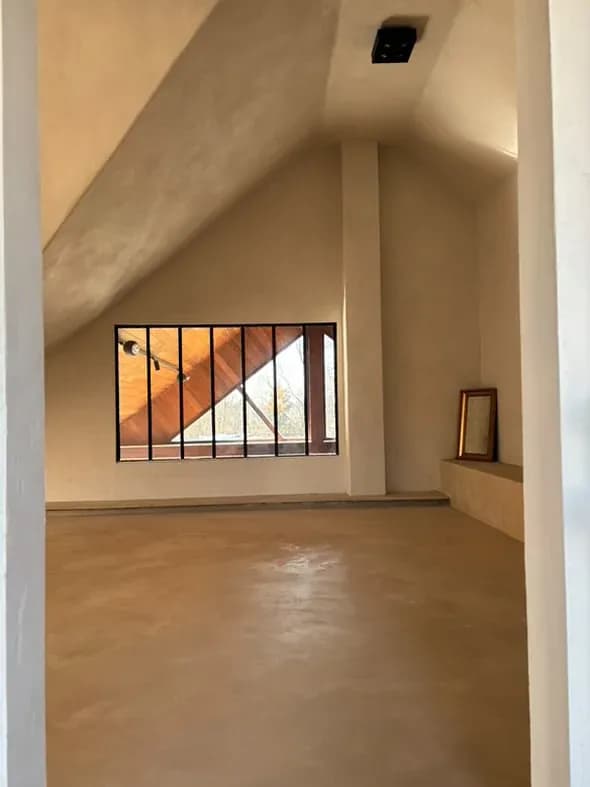
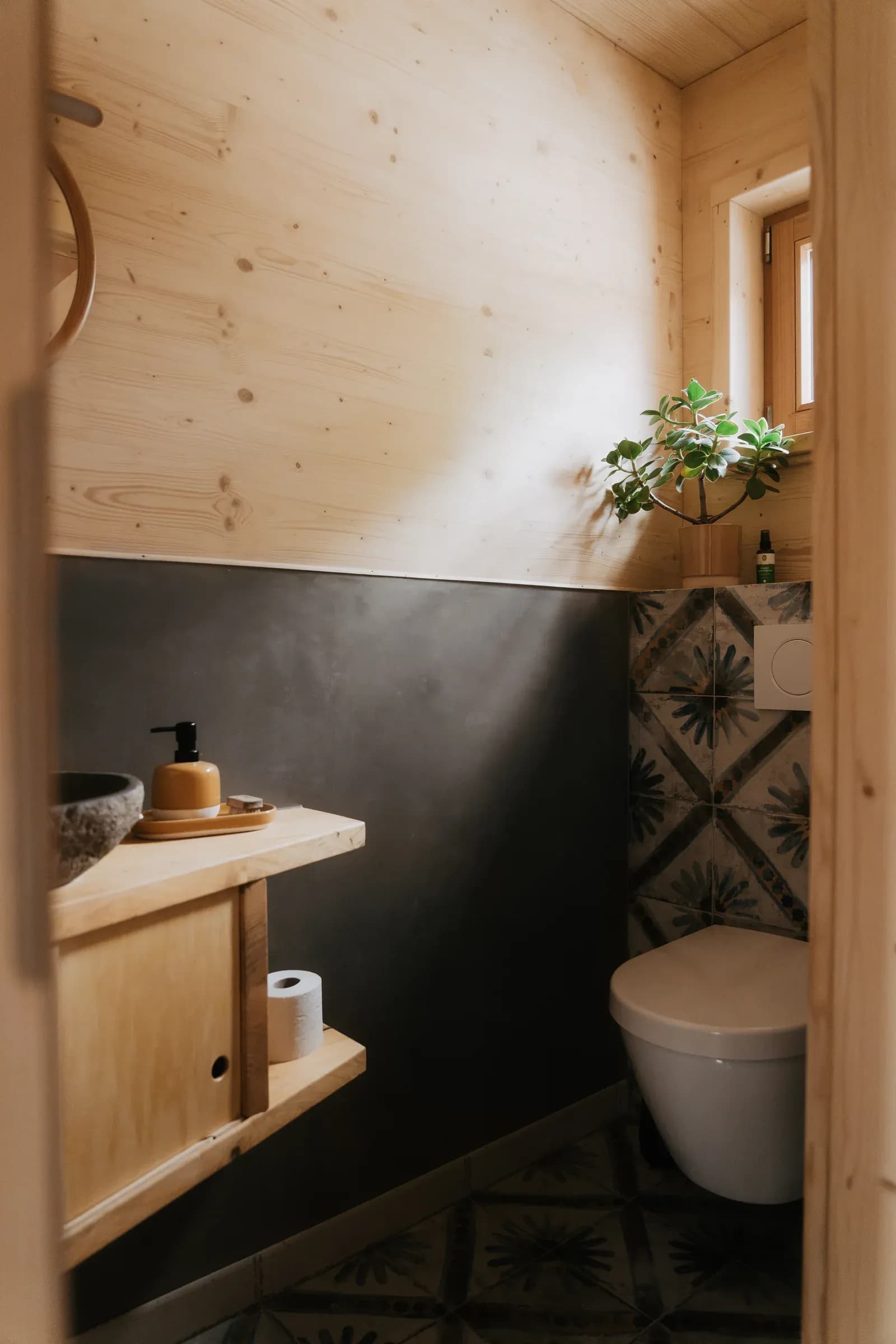
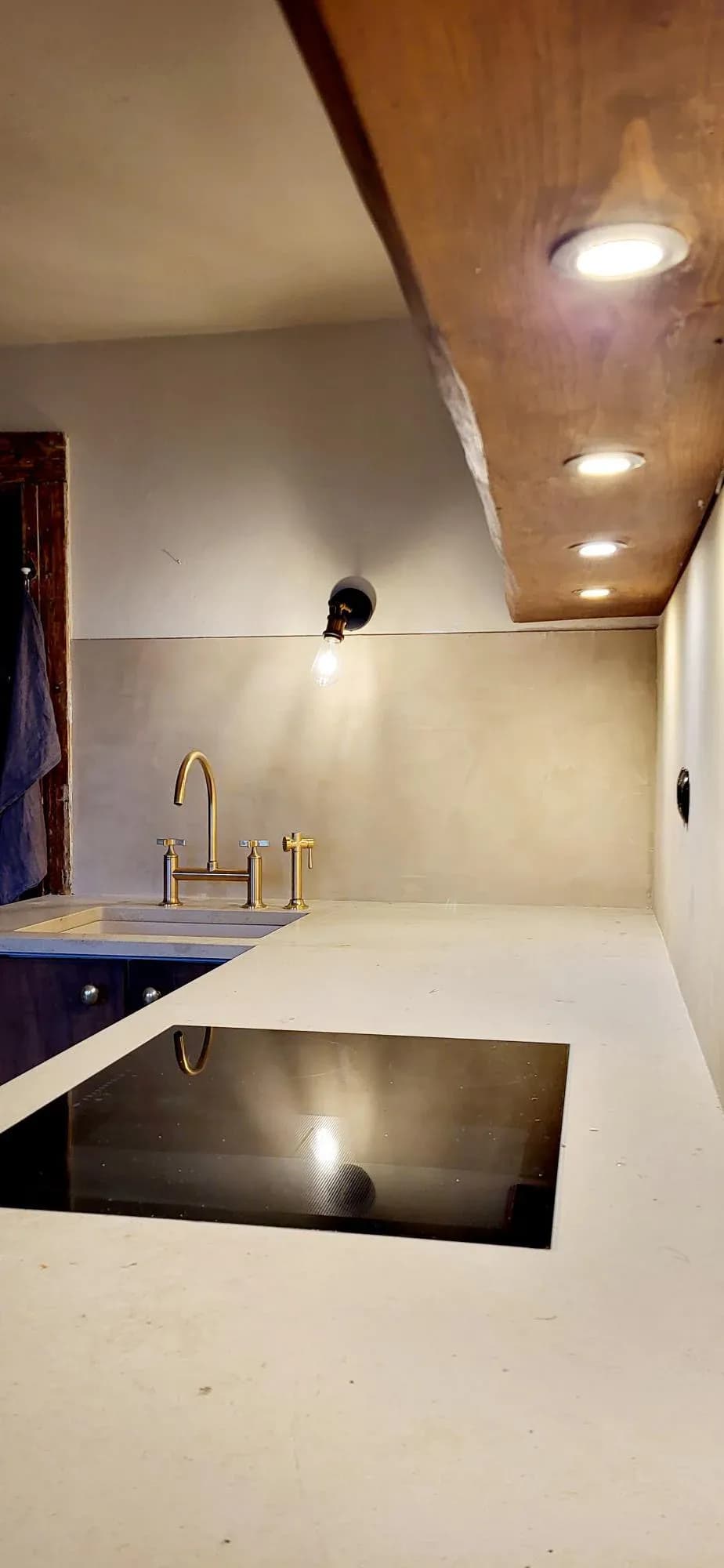
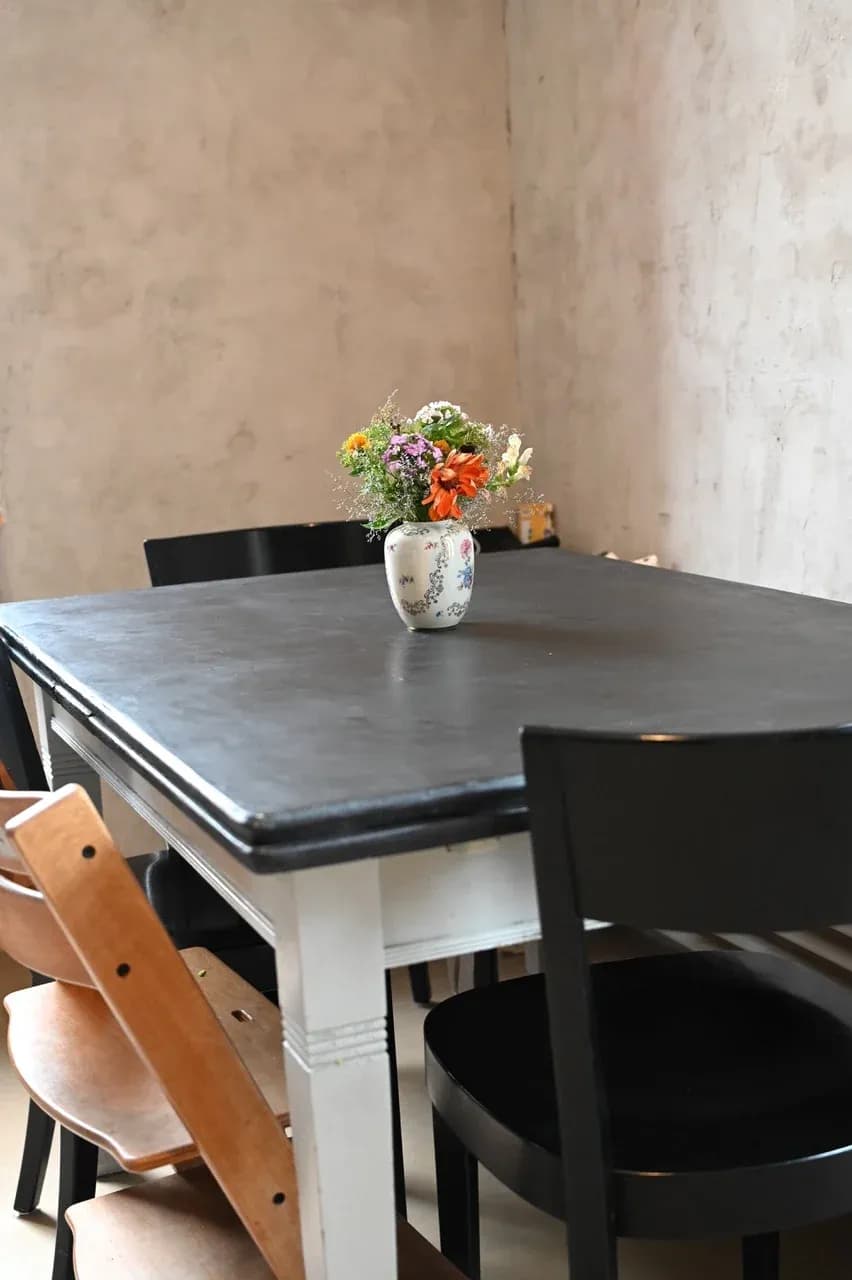
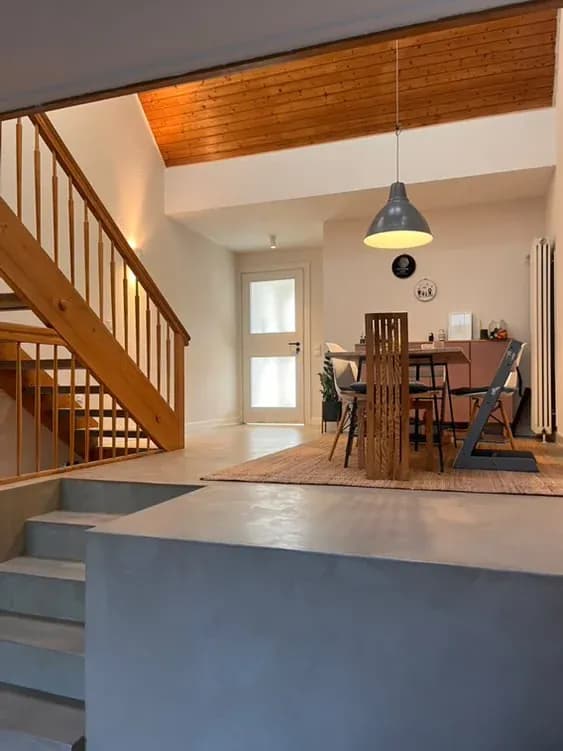
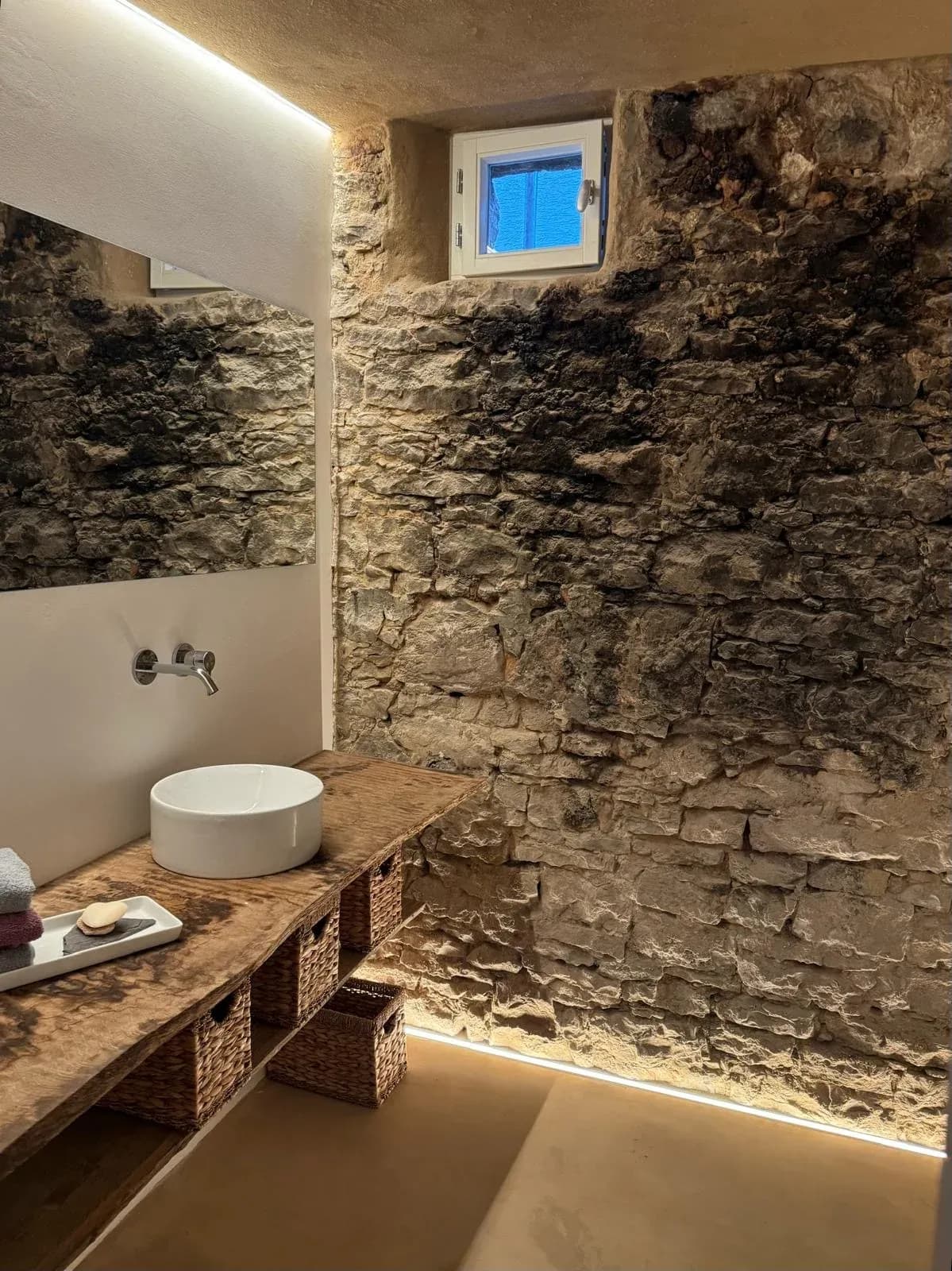
Impressions
Here Claycasein was trowelled onto wooden boards in Grau 5.1.
Projects by application
Floors, walls, kitchens and furniture from customer projects. Filter by application. More regularly on Instagram.
Questions about the applications
Substrates, tiles, underfloor heating and bathrooms: the questions we hear most.
On which substrates has Claycasein already been applied?
Claycasein adheres to many substrates. It has already been applied on screed, concrete, wood, Fermacell dry screed, plasterboard, gypsum fibre boards, plaster, rammed earth floors, clay screed and, after priming, even on plastic veneer. Important: the substrate must be dry, load-bearing and free of cracks. When in doubt, lay a test area.
Can I apply Claycasein directly on tiles?
We currently do not recommend it, even though trowelling directly on tiles has been done successfully: we have no long-term experience with it yet. Our advice: rework the tiles first with a suitable filler or levelling compound and reinforcement mesh. Your builders merchant knows which product fits.
Does Claycasein work with underfloor heating?
Yes, with standard low-temperature underfloor heating. The heating stays off during application and drying.
Does Claycasein work in the bathroom?
In the bathroom only to a limited extent, in the direct wet area not at all. Outside of it Claycasein works well, for example on the wall behind the washbasin. Do not connect it directly to the shower tray: Claycasein must not stay damp permanently. In entrance areas it works with a dirt-trapping zone. Frequent standing water leaves marks, as on a wooden floor.
How hard-wearing is the surface?
Comparable to an oiled wooden floor, also in sensitivity. The test value for abrasion is 0.01 g, measured on the Base material without oil and wax. Claycasein feels warm, similar to wood. The thin layer of 2 to 3 mm has no insulating effect though. On a clay masonry stove, 50 to 60 °C were measured without any negative effect.
Made in the Zollernalb district, shipped across Germany
Claycasein comes from RENNER in Balingen, Baden-Württemberg. Florian Renner developed the recipe in 2022 out of his work on existing buildings, and it is made in small batches. We ship across Germany, and in Denmark our partner Havnens Haender in København supplies it. Before we write a quote we look at your project: substrate, area and colour. The test values for the Base were determined by HAWK Hildesheim. Claycasein is a natural product made from 100 % natural raw materials.
Does Claycasein suit your project?
Send us the area, the substrate and two photos. We will tell you honestly what works and calculate the material you need.